
Tea Leaves
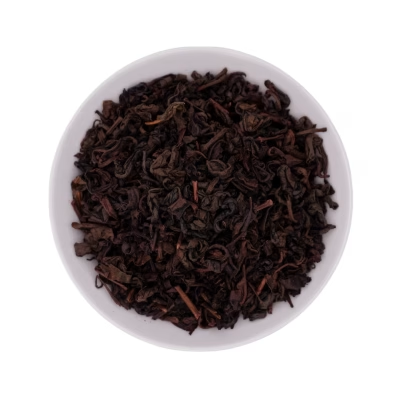
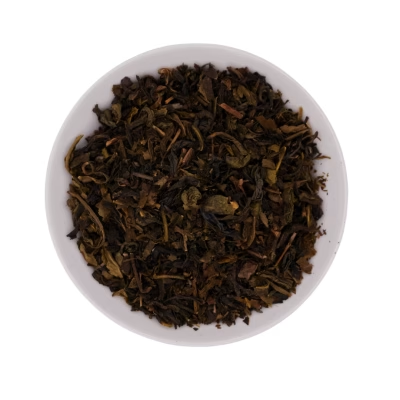
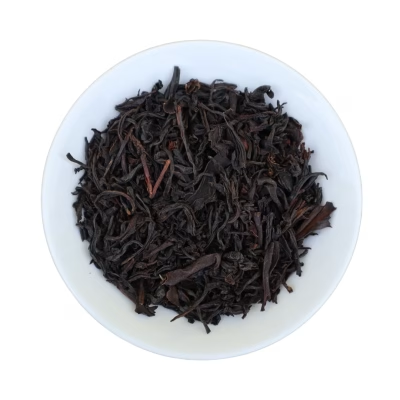
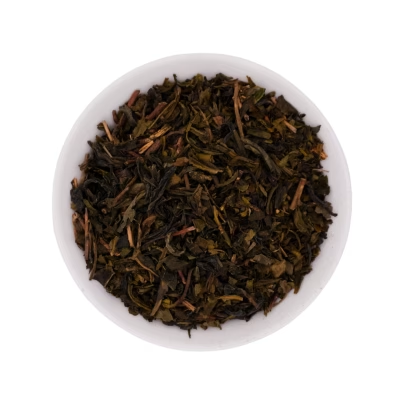
Explore our range of tea leaves, incl. green, black, and oolong teas. Each variety is carefully selected and processed to bring out its unique flavour and aroma. For more information on tea leaves, scroll to the bottom of the page.
Showing 1–16 of 28 results
-
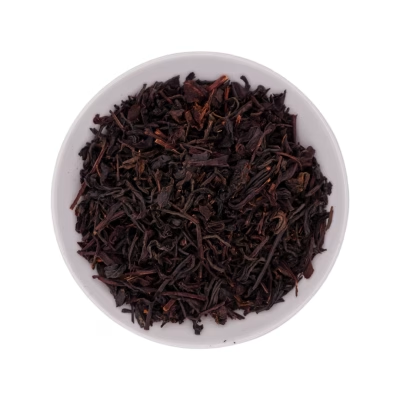
Assam black Tea – Grade A 600g – Box of 30
£285.00 SKU: 81PC02B30Add to basket -
Assam black Tea – Grade A 600g – Single Unit
£10.00 SKU: 81PC02Add to basket -
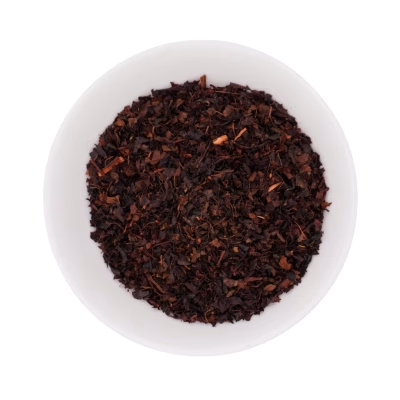
Assam Black Tea 600g – Box of 24
£190.80 SKU: 81LT01B24Add to basket -
Assam Black Tea 600g – Single Unit
£8.37 SKU: 81LT01Add to basket -

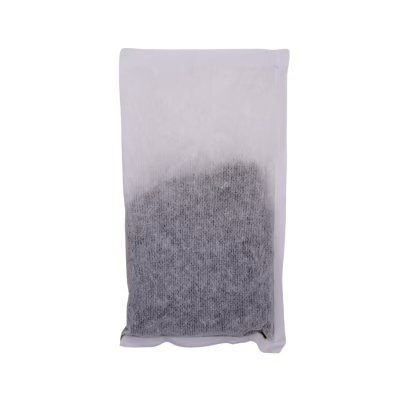
Commercial tea bag – premium black tea (12x50g) – Box of 36
£421.20 SKU: 81PC01B36Add to basket -
Commercial tea bag – premium black tea (12x50g) – Single Unit
£12.32 SKU: 81PC01Add to basket -
Da Hong Pao Oolong Tea 600g – Box of 30
£298.37 SKU: 81PC12B30Add to basket -
Da Hong Pao Oolong Tea 600g – Single Unit
£10.47 SKU: 81PC12Add to basket -
Dark Roasted Oolong Tea 600g – Box of 30
£275.40 SKU: 81LT04B30Add to basket -
Dark Roasted Oolong Tea 600g – Single Unit
£9.66 SKU: 81LT04Add to basket -
Jasmine Green Tea – Grade A 600g – Box of 36
£358.20 SKU: 81PC04B36Add to basket -
Jasmine Green Tea – Grade A 600g – Single Unit
£10.47 SKU: 81PC04Add to basket -
Kenyan Black Tea 600g – Box of 30
£292.37 SKU: 81PC10B30Add to basket -
Kenyan Black Tea 600g – Single Unit
£10.26 SKU: 81PC10Add to basket -
Light Oolong Tea 600g – Box of 36
£475.20 SKU: 81PC06B36Add to basket -
Light Oolong Tea 600g – Single Unit
£13.89 SKU: 81PC06Add to basket
What are Tea Leaves?
Encyclopaedia Britannica explains that tea leaves come from the evergreen plant Camellia sinensis, whose young leaves and buds are harvested to produce tea. After picking, the leaves are processed in different ways incl. withering, oxidising, and drying. That's how different types of tea are created, like Black, Green and Oolong tea. The method of processing influences the flavour, colour, and chemical composition of the final brewed tea.
Purely Tea illustrates that what makes black, green and oolong tea distinct is how much oxidation the leaves undergo after they are picked. Oxidation is a chemical process where enzymes in the leaves react with oxygen, changing the colour, flavour and aroma of the tea. For green tea, oxidation is stopped very early by quickly heating the leaves (often by steaming or pan‑firing), so they retain their natural green colour and fresh, grassy flavour. Black tea is allowed to oxidise fully; the leaves are bruised and left in contact with oxygen until they turn dark and develop bold, rich flavours and darker liquor. Oolong tea falls in between. It undergoes partial oxidation, stopping the process at a chosen point to produce a wide range of flavours and colours between green and black tea.
Origin
According to Encyclopaedia Britannica, the plant Camellia sinensis is native to parts of Southwest China, northern Myanmar (Burma) and Northeast India. From this native region, tea cultivation spread widely.
Today, tea is grown commercially in many parts of the world, with China, India, Kenya and Sri Lanka among the largest producers of tea leaves according to data on global tea output, where these countries together account for significant portions of total production.
Brewing
Taipec offers three types of tea: Geen, Black and Oolong. But they're not brewed the same way. For 200ml you need:
- 5g green tea, brew for 7min
- 5g oolong tea, brew for 8min
- 7g black tea, brew for 15min
Please note: these are recommendations only. Feel free to adjust the measurements to your own taste.
For a more in-depth explanation, watch the video.
Quality of Taipec Tea leaves
Taipec selects and processes high quality tea leaves in our Taiwan factory using traditional techniques. Unlike the tea dust in standard tea bags, our leaves come from whole tea plants. Whole leaves produce a stronger and more refined flavour when brewed.