
What are Tapioca Pearls made of?
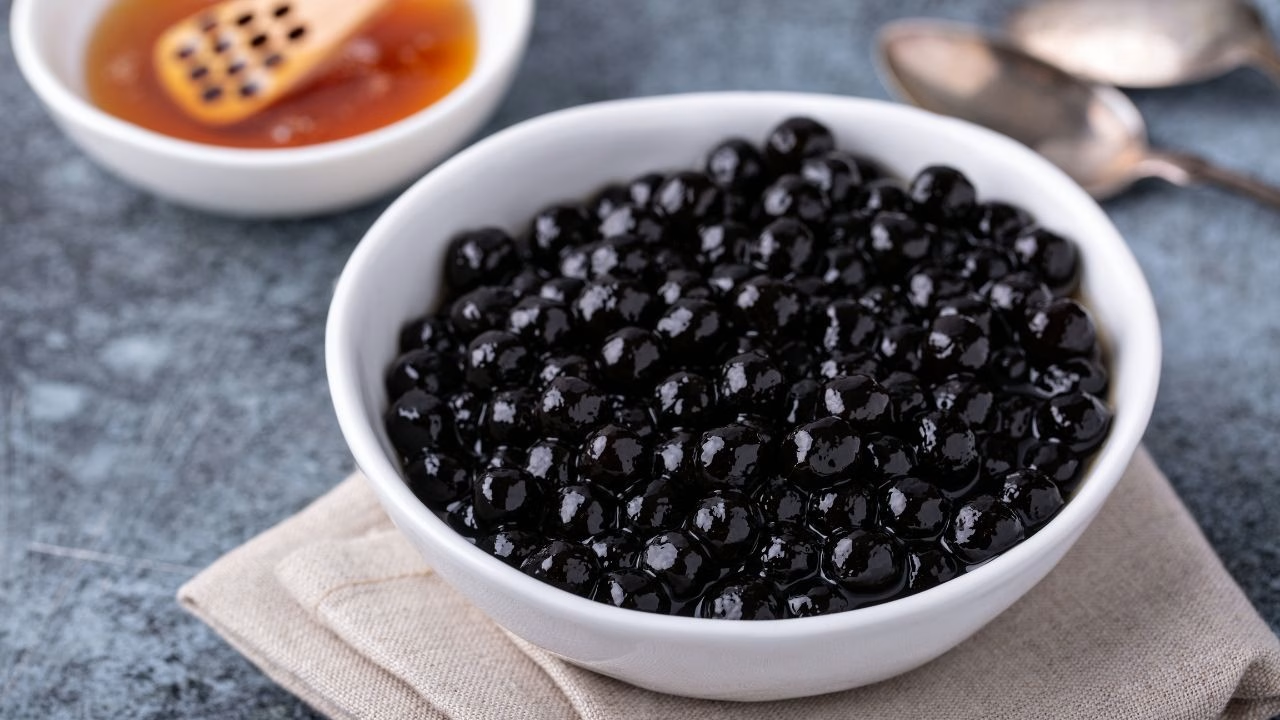
What are tapioca pearls?
Tapioca pearls are round, edible spheres produced from tapioca starch, which is extracted from the root of the cassava plant. (source) When tapioca starch is cooked with water and heat, it changes physically. The tiny starch grains swell up, soak in water, and turn into a kind of gel. This is what makes the pearls soft, chewy, and a bit bouncy. (sourc) The texture people love in things like bubble tea.
You can enjoy boba pearls in any bubble tea, but they’re most popular in milk teas. Unlike popping balls or jelly, they are starchy, giving a chewy, filling texture.
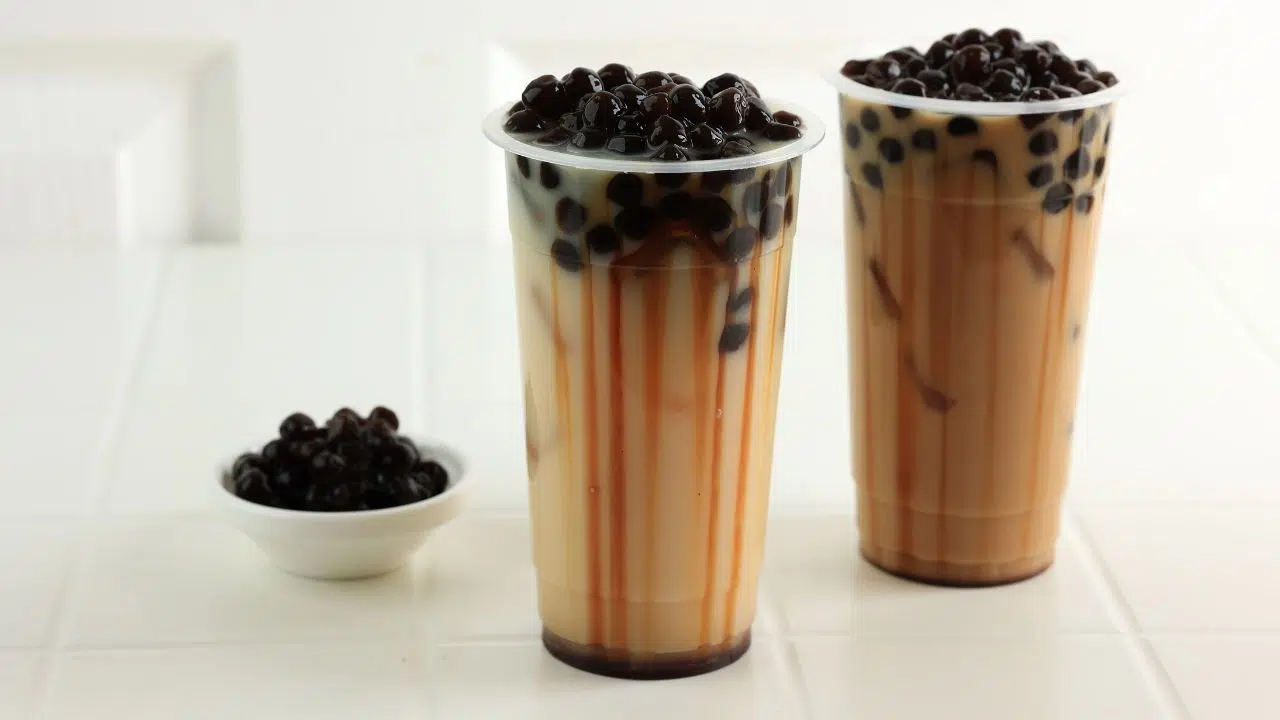
What are tapioca pearls made from?
There are different types of tapioca pearls: black, brown sugar and white. Let's look at how each is made.
Black tapioca pearls
Regular black tapioca pearls are made starting with tapioca starch, which is extracted from cassava roots. The Cassava roots are peeled, grated, and washed until only the pure starch remains. That starch is then mixed with water to form a sticky dough, which gets rolled, cut, and shaped into little spheres. Once boiled, these pearls become chewy. As the pearls are very sticky, they need some sugar syrup. The most common sugars to soak tapioca pearls are brown sugar, honey flavoured or hazelnut flavoured syrup. The dough itself is mostly plain, letting the chewy texture steal the show.
Brown sugar tapioca pearls
Brown sugar pearls take things up a notch. Instead of waiting until after cooking, the brown sugar is added straight into the dough from the start. The sugar is heated with water until it caramelises, then mixed with the starch to form a rich, dark dough. Shaped and boiled just like regular pearls, they end up with a deeper colour and a caramel flavour. Even if it has brown sugar added inside the pearls, sugar syrup is still added afterwards to prevent them from sticking together.
White tapioca pearls
White tapioca pearls are also made from tapioca starch. The process starts by cleaning, peeling, and grinding the cassava into a pulp to release the starch. The starch is then separated from the fibrous parts using water, filters, and sedimentation, producing a purified starch.
Then, the starch is mixed with water to form a dough, which is shaped into small, uniform spheres. The pearls are then dried to remove moisture and polished to make them smooth and glossy. Unlike black tapioca pearls, white ones usually don’t contain brown sugar or colouring, so they remain pale in colour. Like all others, sugar syrup is added afterwards.

Our Tapioca
Now that you know all about how tapioca flour is used to produce boba pearls, you may be wondering where to get your hands on some!
We stock:
- three different brands of regular black tapioca pearls,
- three different brands of brown sugar pearls,
- white tapioca pearls,
- quick-cook tapioca pearls and
- instant tapioca pearls.
All Taipec's tapioca pearls are Halal-friendly and our TO brown sugar pearls are Kosher-certified.
For the most authentic, reliable and delicious tapioca pearls, store owners and bubble tea enthusiasts should look no further than Taipec.
Our commitment to quality means you can rest assured that you are receiving the highest quality ingredients and flavours available. For any questions, such as how to cook or which quantities to buy, please do not hesitate to get in touch with our team.
As a store owner, it is beneficial to be an expert in all things boba. Hopefully now you are one step closer!