
Is Bubble Tea Vegan?

Can You Drink Bubble Tea on a Vegan Diet?
Yes, you can. Bubble tea is vegan. But read below to see per bubble tea ingredient why they're vegan.
What does “vegan” mean?
According to Cambridge Dictionary, vegan means a choice of diet where a person who does not eat or use any animal products. This means they avoid foods like meat, fish, eggs, cheese, and other dairy products. It also includes not using items made from animals, such as leather.
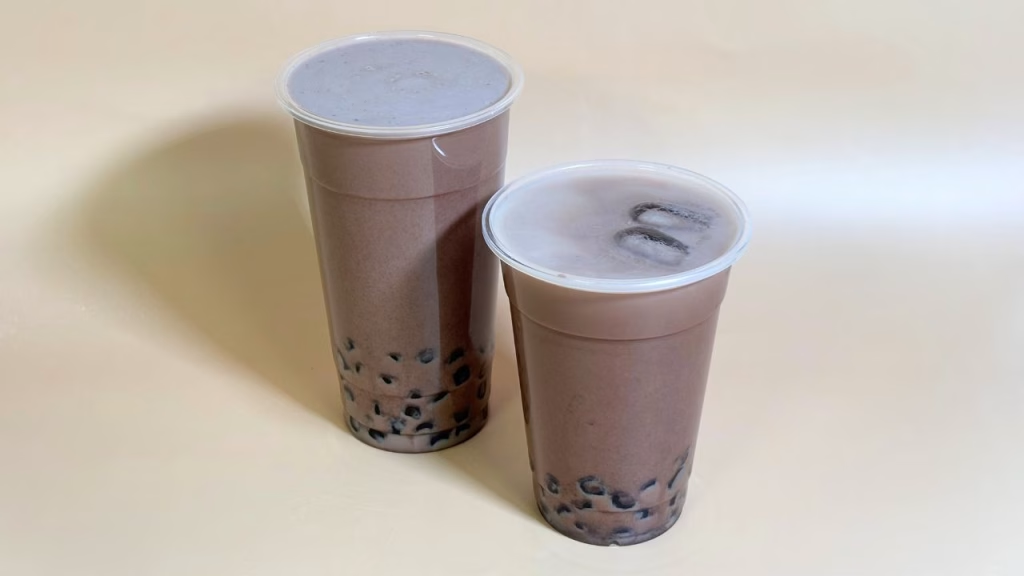
Which bubble tea ingredients are vegan?
Let's break down all the bubble tea ingredients and whether they're vegan.
Are tea leaves vegan?
Yes, they are. Peer-reviewed food science research clearly shows that green, black and oolong teas are all produced from the leaves of the tea plant (Camellia sinensis), with differences due to oxidation and processing stages. These studies describe chemical composition and processing: all plant-based processes with no animal inputs in the basic product.
For example, the food science research explains that:
- Green tea is un-oxidised,
- Oolong tea is partially oxidised, and
- Black tea is fully oxidised
But all three start from plant leaves and maintain plant-based composition throughout processing. So, yes, tea leaves are considered suitable for vegan diets.
Are tapioca pearls vegan?
Yes! Peer‑reviewed research on tapioca and tapioca pearl production confirms that tapioca pearls are made from starch extracted from the cassava plant (Manihot esculenta), which is a root vegetable. The research describes tapioca pearls as starch‑based products derived from plants, not animals. Because they are produced from a plant‑derived starch, in their basic form they contain no animal‑derived ingredients. This means they are vegan by ingredient composition. There’s no animal tissue, dairy, egg or other animal product used in the starch or the standard shaping of tapioca pearls.
Are popping bobas vegan?
Yes, they are. Popping boba are juice‑filled spheres made by a process called spherification. In this method, a liquid such as fruit juice is turned into tiny edible balls by mixing it with sodium alginate, a gelling ingredient extracted from brown seaweed, and then exposing it to a calcium salt solution so it forms a thin gel membrane around the liquid core. This gel membrane comes entirely from plant‑derived or mineral ingredients and does not require animal‑based products in its basic form. Therefore, when the juice and all additives are plant‑based and free of animal components, popping bobas made this way are consistent with vegan diets.
Are coconut jellies vegan?
Yes. Coconut jelly, often called nata de coco, forms when bacteria ferment coconut water to create a firm jelly made mainly of bacterial cellulose. This is a plant‑based form of fibre created without animal products. Research in the International Journal of Food Science and Technology describes how nata de coco is produced from coconut water through fermentation, and it emphasises its use as a food ingredient with high fibre and distinct texture. Since the jelly’s core component comes from coconut water and bacterial cellulose rather than animal‑derived gelatin or collagen, coconut jelly in its basic form is consistent with vegan diets when no animal‑derived additives are included.
Are sugar syrups vegan?
Not always, but our syrups are. Peer‑reviewed food science research describe how sugar itself comes from plant sources such as sugarcane or sugar beets, but what makes it vegan‑friendly or not depends on how it is processed. Some commercial white cane sugars — and syrups made from them like invert sugar — are refined using bone char filters made from cattle bones to remove colour and impurities; even though the bones do not remain in the final product. This use of an animal‑derived processing aid means the sugar is not considered vegan by strict ethical standards. In contrast, sugar beet sugar and organic cane sugar avoid bone char filtration, making them compatible with vegan diets.
Brown sugar syrups, which are typically made by adding molasses back to refined sugar, share the same issue: if the base refined sugar was processed with bone char, the resulting syrup is also not vegan. To ensure vegan status for any sugar syrup, you need to confirm that the sugar was refined without animal‑derived processing agents such as bone char.
Nonetheless, Taipec's sugar syrups are vegan.
Are flavoured syrups vegan?
Usually, yes. Flavoured syrups are thick sugar solutions with added flavour compounds, and food science reviews describe them as concentrated sugar mixed with water and natural or artificial flavourings to give a specific taste profile. The plant‑derived components of syrup such as sugar extracted from cane or beet, along with flavour compounds from fruits or botanicals, are inherently vegan in their composition when no animal‑derived ingredients are included. Whether a specific flavoured syrup is vegan therefore depends on what flavourings or additives are used and how the sugar and other ingredients were processed; ingredients such as honey or dairy‑based flavourings would make a syrup non‑vegan even though the basic syrup matrix itself is based on plant sugars.
Are creamer powders vegan?
Yes and no. Creamer is milk but in powder form, so it means it's a product derived from animals. Meaning it's not vegan. However, we stock a vegan creamer. Non‑dairy creamer powders replace milk with plant oils and carbohydrates for use in drinks like coffee. They can be made from coconut, soybean, rice bran, palm oil, and sugar syrups, making them vegan because they contain no animal milk. However, some commercial creamers add milk proteins such as sodium caseinate for texture or colour, which makes them not vegan. To stay fully vegan, creamers must use only plant-based ingredients and avoid any animal-derived additives. (Oxford Academic, 2024)
Are flavoured powders vegan?
They can be, but usually not. Flavoured powders mix sugar or other ingredients with natural or artificial flavours to add taste to drinks. They are vegan when all ingredients come from plants, but some powders include animal-based additives like milk proteins, which makes them not vegan. To be sure, check the ingredient list for any animal-derived components. (MDPI, 2023)
Are fruit jams vegan?
Yes, they are. Jam is made by cooking fruit pulp with sugar and a gelling agent such as pectin to create a thick fruit spread, and these basic ingredients come from plants rather than animals. Because the core ingredients — fruit, sugar and pectin — are plant‑derived, plain fruit jam is vegan as long as no animal‑derived additives are included in the recipe. (ScienceDirect)
Are sweet boiled red beans and diced taros vegan?
Yes, they both are.
Sweet boiled red beans or Adzuki beans come from plants and provide carbohydrates, protein, fibre, vitamins and minerals. Research shows they form the basis for many cooked dishes, including sweetened red beans, and all their nutrients come from plant tissues. When cooked with no animal ingredients, sweet boiled red beans are vegan.
Sweet boiled diced taro is plant-derived and rich in starch, fibre and other nutrients. Cooking changes their texture but does not add any animal products. It's vegan when no animal additives are included.

Which Taipec products are suitbable for vegans?
Almost all of them.
- All teas
- All toppings except yogurt popping bobas
- All sugar syrups
- All flavoured syrups except yogurt flavoured syrup
- Our vegan creamer powder
- Our vegan flavoured powders, matcha powders (regular and 2-in-1) and topping powders (grass jelly and caramel pudding)
- All fruit jams
- All boiled sweet red beans and diced taro
So, it bubble tea vegan?
Yes, all bubble tea ingredients besides yoghurt-flavoured popping bobas and syrup, some flavoured powders and dairy creamers, bubble tea ingredients are naturally vegan.
Other Topics