
Is Bubble Tea Gluten-Free?
Can You Drink Bubble Tea on a Gluten-Free Diet?
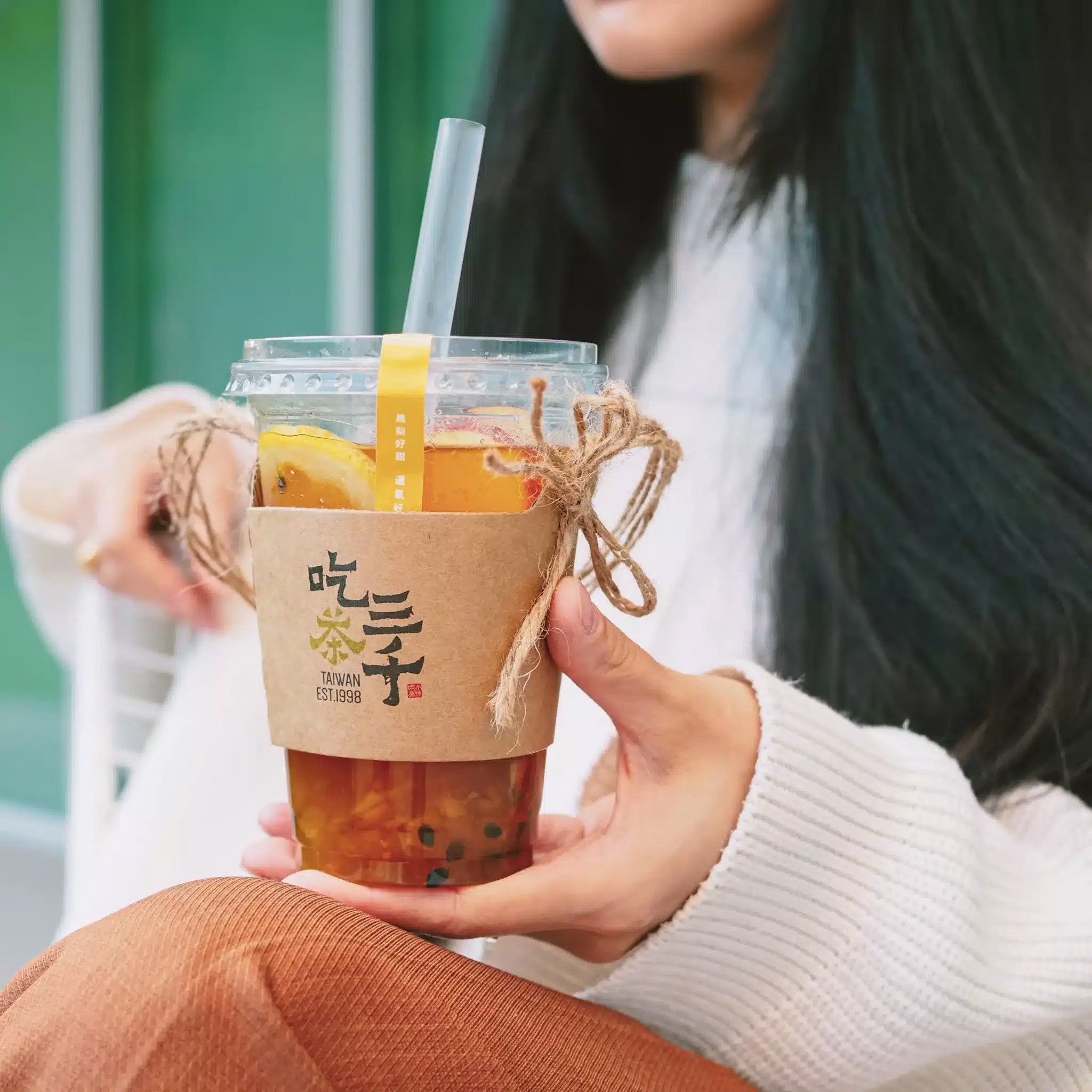
Yes, you can. Bubble tea is gluten-free. But read below to see per bubble tea ingredient why they're gluten-free.
What does “gluten-free” mean?
“gluten-free” means that a food has almost no gluten in it. Less than a tiny amount, about 20 milligrams per kilogram of food. Gluten is a protein found in grains like wheat, barley, and rye. For most people, eating gluten is completely fine. But some people need to avoid it:
- Celiac disease (CD): Eating gluten damages their intestines and can make them very sick.
- Wheat allergy (WA): Gluten can trigger an allergic reaction.
- Confirmed nonceliac gluten sensitivity (NCGS): Some people feel unwell after eating gluten, even though they don’t have celiac disease or a wheat allergy.
For everyone else, going gluten-free isn’t necessary and could actually cause problems, like missing out on important nutrients, unless a doctor or dietitian recommends it.
Which bubble tea ingredients are gluten-free?
Are tea leaves gluten-free?
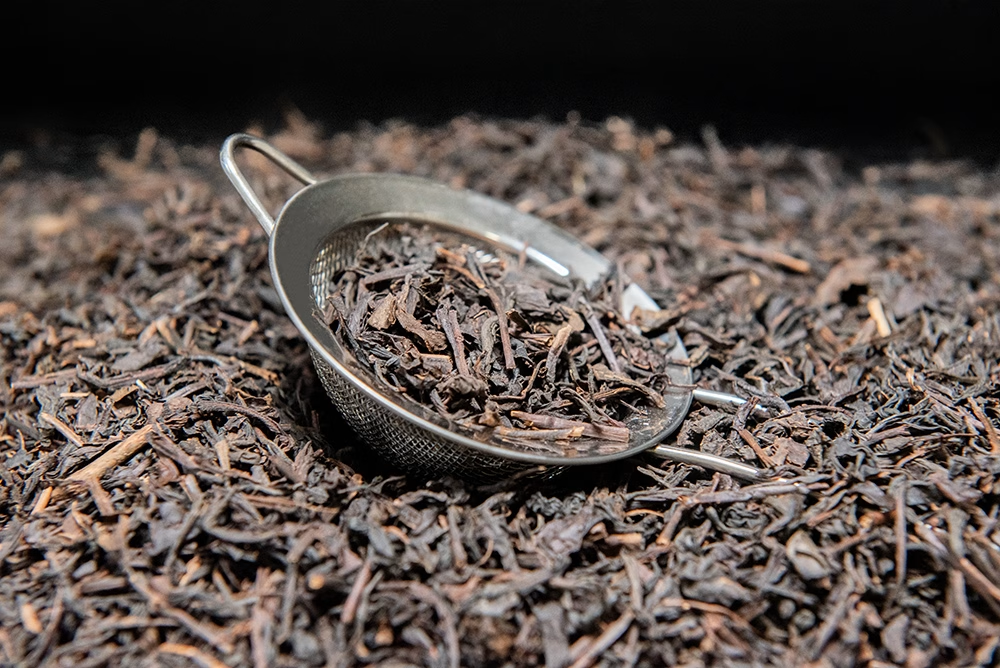
Plain black tea, green tea, and oolong tea are naturally gluten-free. The leaves used to make these teas come from the Camellia sinensis plant, which does not contain gluten proteins. Studies and food safety tests confirm that unflavoured teas made from just the leaves do not have gluten. However, some teas, especially flavoured teas or teas processed in facilities that also handle gluten-containing grains, can have tiny amounts of gluten due to cross-contamination, so people with coeliac disease should check for gluten-free labelling to be safe.
All our teas are free of gluten!
Are tapioca pearls gluten-free?
A peer-reviewed study mentions that tapioca starch comes from a root (cassava) and contains no gluten. Even though tapioca starch itself doesn’t work well for making bread because of its baking properties, it is still naturally gluten-free. So yes, tapioca pearls are gluten-free.
Are Taipec’s tapioca pearls gluten-free? Yes! All Taipec’s tapioca pearls are gluten-free.
Are popping bobas gluten-free?
Yes, popping balls (also called popping bobas) are generally gluten-free, and here’s why.
- Popping bobas aren’t made from wheat, barley, rye, or other gluten-containing grains.
- They are made from a gel-like substance called alginate, which comes from seaweed, and a liquid inside, usually juice or syrup.
- The gel “shell” holds the juice, kind of like a tiny bubble. This is similar to how some foods are “encapsulated” to protect vitamins or oils. In the case of popping bobas, it’s for flavour and fun.
- Because the main ingredients are plant-based and don’t contain gluten, the popping bobas themselves don’t have gluten.
Note: Some flavours, coatings, or syrups might have gluten, so it’s always safest to check the ingredients if you are very sensitive.
So, the main conclusion: popping bobas are naturally gluten-free, thanks to alginate-based shells. Wondering whether Taipec's popping bobas are gluten-free? Well, yes! All of our popping bobas are free of gluten.
Are coconut jellies gluten-free?
Coconut jellies used in bubble tea (nata de coco) do not contain gluten as part of their natural composition. They are made from coconut water fermented into bacterial cellulose, which has no gluten proteins and is structurally very different from wheat/barley proteins. There is no academic research indicating gluten is inherently present in nata de coco itself. However, because specific gluten testing studies on these products haven’t been published, the only way to be absolutely certain about a particular brand or batch is to check for gluten‑free certification or lab analysis.
Our coconut jellies are free of gluten.
Are sugar syrups gluten-free?
As we have both white and brown sugar syrups, let's break each down below.
1) White sugar syrups
White sugar syrups such as cane sugar syrup made from cane or beet sugar and invert sugar syrup where sucrose splits into glucose and fructose contain almost entirely simple sugars and do not contain gluten proteins. These syrups stay completely free of gluten since they consist of carbohydrates, not protein.
An academic study published in the Journal of Food Composition and Analysis analysed a range of glucose syrups using very sensitive laboratory methods (ELISA and mass spectrometry) and found that the refined syrup samples contained no detectable gluten above analytical limits, even when syrups were originally derived from wheat or maize starch. This research supports the conclusion that highly refined sugar syrups are safe for people with coeliac disease because they lack the intact gluten proteins that trigger immune reactions.
2) Brown sugar syrups
Brown sugar syrup, made from brown sugar or sugar with added molasses, does not contain gluten proteins because simple sugars such as sucrose, glucose and fructose make up most of it rather than the proteins found in wheat, barley or rye. Analytical food chemistry research on syrups shows that laboratory techniques like chromatography measure and characterise the sugars, defining these products by their carbohydrate content and confirming that they do not include proteins like gluten.
And as you might have already guessed, all our sugar syrups are gluten-free.
Are flavoured syrups gluten-free?
Based on a study that analysed gluten content in various food products, flavoured syrups do not naturally contain gluten. The research tested a variety of food products, including sugarcane powder, and found that gluten was either undetectable or well below the safety threshold for gluten-free foods. Any small traces that appeared came from cross-contamination during processing, not from the ingredients themselves. Manufacturers make flavoured syrups from sugar from sugarcane or beet, both naturally gluten-free, so the syrups do not contain gluten. The syrup only risks contamination if the facility also handles gluten-containing foods.
Also all our flavoured syrups are gluten-free, including those imported from Taiwan and those produced in the UK.
Are creamer powders gluten-free?
Creamer powders — both regular dairy-based and plant-based/vegan types — do not naturally contain gluten. The main ingredients such as milk proteins, plant proteins, sugars and oils do not contain gluten. Academic food science research confirms that dairy and plant proteins remain gluten-free when used in food products. (Sciencedirect.com, 2008; Sciencedirect.com, 2017)
However, like all processed foods, creamer powders could potentially pick up small amounts of gluten through cross-contamination during manufacturing, so people with coeliac disease or severe gluten intolerance should check for gluten-free labelling or certification to be safe. (PubMed, 2019)
Yep, you guessed it, our creamer powders are all free of gluten.
Are flavoured powders gluten-free?
Flavoured powders do not automatically contain gluten, but their ingredients and production methods determine whether they are safe. Since gluten is a protein found in wheat, barley, and rye, powders made without these grains remain naturally gluten-free. Peer-reviewed studies show that labs can test powdered foods for gluten using sensitive methods like ELISA, and gluten appears only if manufacturers add gluten-containing ingredients or if cross-contamination occurs during production. (mdpi.com, 2021; PubMed, 2023). This means many flavoured powders are safe for gluten-free diets, but people with coeliac disease or severe gluten sensitivity should check for gluten-free certification or allergen labelling to be sure.
Yes, our entire range of flavoured powders, including 2-in-1, 3-in-1 and creamer powders, are gluten-free.
Are fruit jams gluten-free?
Fruit jams do not naturally contain gluten. However, production processes can sometimes introduce contamination. The main ingredients in jam — fruit, sugar, and pectin — do not contain gluten. So jam made only from fruit and sugar should be gluten‑free by ingredient. Scientific studies that analyse gluten contamination in a broad range of foods using validated ELISA tests have found that manufacturing, handling or processing can sometimes introduce measurable gluten into naturally gluten free foods, pushing levels above safe thresholds.
Are Taipec's fruit jams gluten-free? Yes!
Are sweet boiled red beans and diced taro gluten-free?
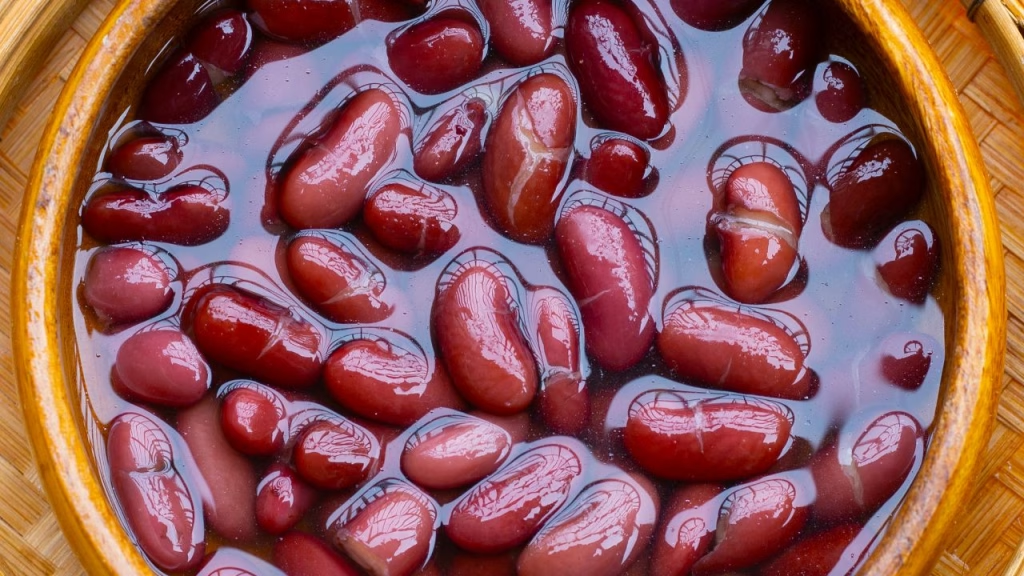
Boiled sweet red beans and boiled sweet diced taro do not naturally contain gluten. Red beans (also called adzuki beans) are legumes, and scientific reviews of legumes show they are rich in starch, protein, fibre, and other nutrients but do not include the gluten proteins. Legumes are used intentionally in gluten‑free foods because they are naturally free from gluten‑containing cereal proteins.
Taro (Colocasia esculenta) is a starchy root vegetable made mostly of carbohydrates and dietary fibre. Multiple research reviews confirm that taro starch and taro products do not contain the proteins that make up gluten, so they are naturally gluten-free and serve as hypoallergenic sources of carbohydrates in food. (PubMed, 2023; Scholarly Community Encyclopedia, 2021)
Are Taipec’s boiled sweet red beans and diced taro’s gluten-free? Yes!
So, it bubble tea gluten-free?
Yes, all bubble tea ingredients are naturally gluten-free, as long as no cross-contamination occurs during processing. At Taipec, you can be confident that only gluten-free ingredients are used.